



The Whispering Well

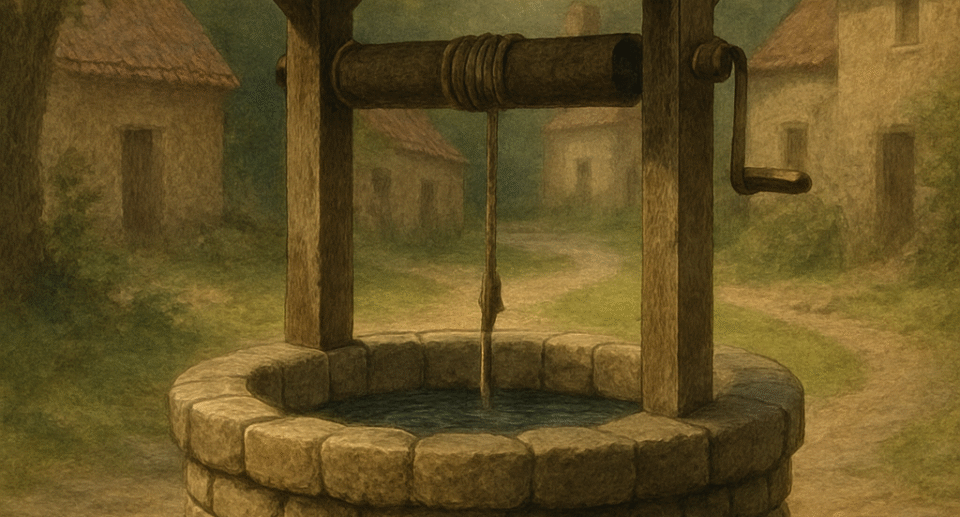
In a quiet village nestled between green hills and ancient forests, there stood an old stone well at the edge of the main square. Cracked and moss-covered, it had long fallen out of use, replaced by modern taps and tanks. But the villagers never dared to seal it. There was something about the well—something that kept it alive in hushed conversations and bedtime stories.
Elders spoke of it as The Whispering Well. It was said that if you leaned close enough, the well would speak to you—not in words, but in memories. The sound of a long-lost loved one’s laughter, the cry of a baby once born nearby, the song of a grandmother who used to hum while drawing water. Children would dare each other to approach it on moonless nights, though most ran away before getting too close.
One summer, a young girl named Amaya came to the village to stay with her grandparents. She was curious and brave, and didn’t believe in village superstitions. One lazy afternoon, while her grandmother dozed off, Amaya wandered to the well. She peered over the edge and felt a strange chill, though the sun was warm.
Then she heard it.
Soft and gentle, like wind in the trees—but clearer. A lullaby. One she hadn’t heard in years. Her mother used to sing it before she passed away. Amaya froze, her heart pounding. She whispered into the well, “Who are you?”
The wind is still. Then came another whisper, this time like her mother’s voice: “I’m always near.”
Word of Amaya’s experience spread fast. Some dismissed it as imagination. Others nodded quietly. That was the well’s way—it didn’t offer proof, just echoes of the past.
From that day, villagers began visiting again—not to draw water, but to remember. Some wept, others smiled. The well, with its dark depths, gave back light in the form of memory.
And so it remained. Not just a relic of the past, but a keeper of it. The Whispering Well.
Forever listening. Forever speaking